Protecting the brain after cardiac arrest
By Jan Jarvis
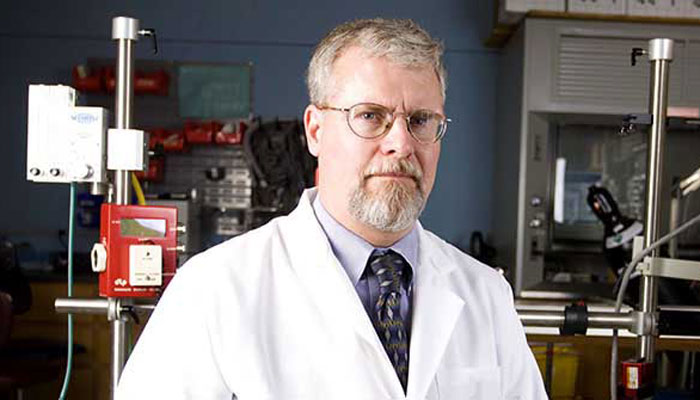
A new treatment identified by UNT Health Science researchers may protect the brain from irreversible brain damage caused by cardiac arrest.
The discovery, published in the May issue of Experimental Biology and Medicine, could offer hope to the more than 500,000 people in the United States who suffer a cardiac arrest each year. Currently there are few treatments available to help these patients.
The brain consumes enormous amounts of metabolic energy and is dependent on its blood supply to deliver energy-yielding fuels and oxygen. When the brain’s blood supply is interrupted, such as during a cardiac arrest, the brain rapidly depletes its energy reserves and toxic metabolites accumulate.
This leads to damage in the molecular components of the brain’s cells, including proteins. As a result, only 8 percent of those who suffer a cardiac arrest outside the hospital survive with brain function intact, said Robert Mallet, PhD, Professor, Institute for Cardiovascular and Metabolic Disease.
“Cardiac arrest is devastating because it severely injures the brain,” Dr. Mallet said. “Moreover, those who are fortunate enough to survive cardiac arrest may be at increased risk of developing senile dementia.”
Cardiac arrest triggers the production of the metabolite methylglyoxal, a byproduct of sugar metabolism that damages proteins and may cause permanent impairment of brain function. In the lab, a research team led by Dr. Mallet found that glyoxalase and other protective enzymes were inactivated following cardiac arrest and CPR, weakening the brain’s natural defenses against methylglyoxal and other toxins.
But giving patients an intravenous infusion of an energy fuel and antioxidant called pyruvate may restore these defenses and preserve functional brain proteins, according to the study. Pyruvate is a natural metabolite that protects the brain against methylglyoxal when given in a timely fashion, Dr. Mallet said.
“Pyruvate could be an ideal brain protectant because it is effective in humans, is chemically stable and has no adverse side effects,” Dr. Mallet said.






Social media