HSC researcher discovered a potential cause for keratoconus
 Cells are the body’s social network. One of the ways they communicate with one another is by transmitting what’s called extracellular vesicles, tiny membrane-bound messages in a bottle.
The study of EVs is exploding throughout many scientific disciplines around the world, as researchers are now beginning to explore their possible use in medical diagnostics and therapy. Different studies have already examined EV’s use in a wide range of applications, from diagnosing and treating cancer to getting rid of skin wrinkles.
EVs are also the subject of a recently published study co-authored by a researcher at The University of North Texas Health Science Center at Fort Worth, which houses The North Texas Eye Research Institute.
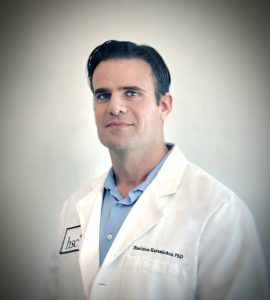
Dr. Dimitrios Karamichos has been examining the link between an eye disease, keratoconus, and EVs in tears. For the first time, Karamichos and his co-investigators identified, isolated and characterized tear EVs in subjects stricken with the disease. Their work has the potential to solve the rubric of exactly what causes the debilitating eye condition and how to treat it.
“I think this study is only the beginning of a massive, unexplored area of research in the context of keratoconus,” said Karamichos, who is executive director of the Eye Institute. “If we can understand the role of EVs in keratoconus, we will unlock a slew of potential drug development and therapeutic options that can have a profound impact on the lives of patients who suffer from this condition.”
What is Keratoconus?
Keratoconus occurs when someone’s cornea — the clear, dome-shaped front surface of the eye — thins and gradually bulges outward into a cone shape. This can cause blurry, distorted vision. In some cases, keratoconus can lead to corneal scarring, thus greatly diminishing vision and even causing blindness.
The cause of keratoconus is unknown, but most researchers think it is a combination of genetics, hormonal imbalances and environmental factors, such as allergies and eye rubbing. It occurs most commonly in late childhood or early adulthood and then mysteriously arrests itself at ages 40 to 45. Some patients who experience scarring at severe disease stages may require a corneal transplant.
Karamichos is one of the world’s foremost researchers on keratoconus. He has studied and published research on a predictive biomarker of the disease, the effects of certain hormones that cause keratoconus, the link between people with Down syndrome and more.
The link between EV tears and keratoconus
In his newest study, the Greek-born researcher and his co-investigators discovered tear EVs have a distinct phenotype compared to their healthier counterparts. The research team also concluded tear EVs from male subjects showed higher total counts, which can be significant as more data emerge.
For their research, the team examined tears in the lateral meniscus of 10 healthy subjects (five males and females) and nine who have been diagnosed with keratoconus (four males and five females).
“Keratoconus is such an unpredictable, multifactorial disease that causes vision problems to a lot of people,” Karamichos said. “With corneal transplants as the gold standard for the treatment of severe keratoconus, the field is desperate for non-invasive, personalized solutions and treatments. My research path has always been driven by the needs in clinics, as I try to keep my discoveries translatable to the real world.”
Tear EV have been linked to other conditions, such as dry eye, Sjӧgren’s Syndrome and types of glaucoma. With his latest work, Karamichos is bringing his life’s work to this new research frontier.
“Extracellular vesicles and related studies have exploded in the ophthalmology world over the last five years or so,” he said. “EVs seem to be so powerful, carrying all sorts of important information (DNA, miRNAs), over long distances within the body, yet we know very little about them in the context of corneal health”.
“Keratoconus disease and the status of the tear film are intimately connected, but it is not clear at this point what component within the tear fluid contributes to the pathobiology of the disease,” he continued. “Curiosity and the potential for clinical applicability led me to the initiation of this research.”






Social media