Emphasizing emotional intelligence in medical education
By Alex Branch
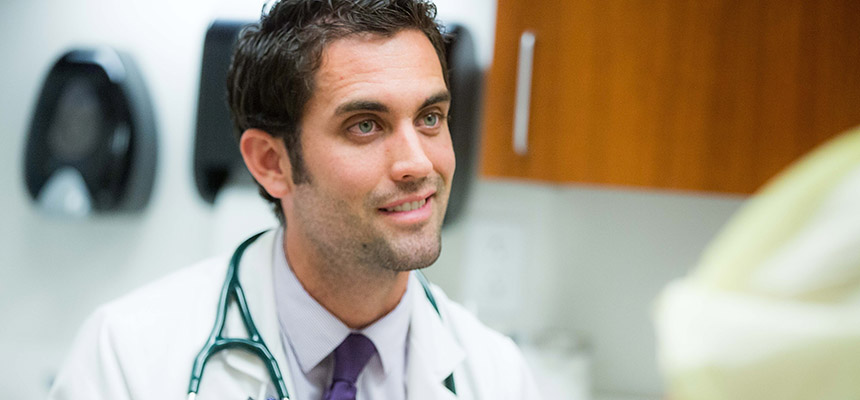
An interprofessional team at UNT Health Science Center has developed an innovative curriculum that emphasizes development of students’ emotional intelligence, a model that has drawn interest from organizations devoted to medical education.
Emotional intelligence and empathy are critical abilities for health care providers but research shows that those skills may decline in students during the strain of medical school, said Susan Franks, PhD, Clinical Health Psychologist and Associate Professor of Family Medicine.
The new curriculum is designed to incorporate more specific activities for students to develop their emotional intelligence and measure that growth during their education, Dr. Franks said.
“Emotional intelligence includes the ability to identify, understand and manage emotions to communicate effectively, empathize with others and be resilient,” she said. “Those skills are invaluable for medical providers not only during interactions with patients but also with other members of a medical team.”
The Texas College of Osteopathic Medicine has long emphasized the interpersonal aspects of patient care, a philosophy evident in students’ consistently high scores on humanistic portions of national board exams and their placement in high-quality primary care residencies.
The incorporation of emotional intelligence development builds off that humanistic philosophy, said Didi Ebert, DO, Assistant Professor of Family Medicine. Decades of research has shown the importance of emotional intelligence in business leadership success. But translating that into medical training is a more recent concept.
“From literature in the business world, we know that what sets top-performing leaders apart is their emotional intelligence, which, unlike their IQ, is not fixed and can be honed with practice,” Dr. Ebert said. “As we define and produce the providers of the future, a curriculum that develops emotional intelligence is essential.”
The first year of the curriculum was piloted last year on first-year medical students in TCOM. Members of the UNTHSC faculty team that designed it have already presented a Learning Communities Institute workshop attended by faculty, staff and students from medical schools across the nation. The team has been invited to do the same in February for the Society of Teachers for Family Medicine.
While the curriculum is initially geared toward medical students, emotional intelligence activities also can be applied to UNTHSC students studying physical therapy, public health, physician assistant studies, biomedical science and pharmacy.
David Farmer, PhD, Director of the UNTHSC Office of Interprofessional Education and Practice, will soon share aspects of the curriculum with the Texas Interprofessional Task Force, a group of 18 Texas academic medical institutions and one health care system dedicated to developing strategies for institutions to share interprofessional practice and education (IPE) initiatives.
UNTHSC, one of the task force’s four founding institutions, is a leader in preparing students to practice extraordinary teamwork as the providers of the future, Dr. Farmer said.
“Medical students won’t just work with other physicians after they leave the Health Science Center and began practicing medicine,” he said. “They will work on teams with physical therapists, pharmacists, physician assistants, public health professionals, researchers and more.
“Emotional intelligence is an ability that every member of a health care team should practice and improve in order to be truly high performing.”
Katy Kemp, MEd, Director of Clinical Education; Haylie Miller, PhD, Assistant Professor of Physical Therapy; Emily Mire, PhD, Director for Wellness Services; and April Wiechmann, PhD, Clinical Neuropsychologist, also are collaborating on development of the curriculum.


Social media