Conference will spotlight outreach to minority communities and COVID-19’s impact on vulnerable populations
The University of North Texas Health Science Center at Fort Worth (HSC) is working with the Texas Community Engagement Research Alliance (CEAL), the National Research Mentoring Network (NRMN) and the Network of the National Library of Medicine (NNLM) to host the 16th Annual Texas Conference on Health Disparities.
The event, titled “Community Approaches to Health Equity,” will feature nationally recognized experts and community leaders who will discuss advances in the field of minority health and health disparities.
The COVID-19 pandemic’s impact on minority communities also will be discussed during the conference, with special focus on how it ties into health equity at a national level. Experts will delve into progress made in tackling misinformation and mistrust surrounding COVID-19 in hard-to-reach and vulnerable communities.
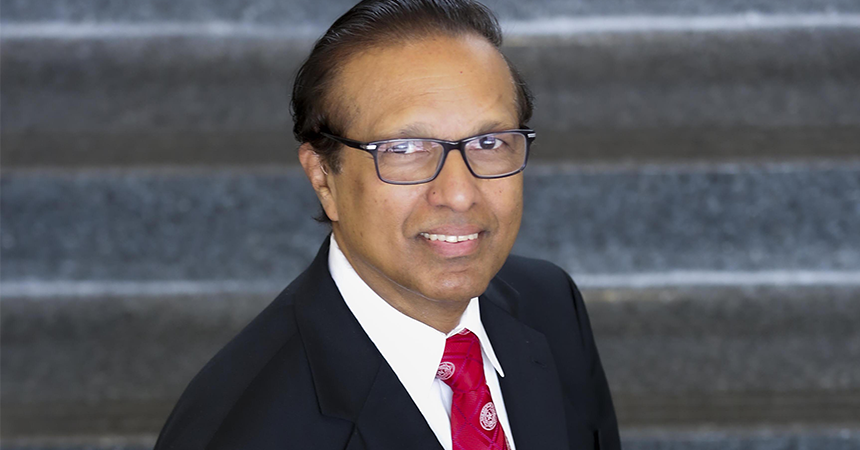
“COVID-19 showed the world the devastating reality of health disparities that impact racial and ethnic minorities,” said Dr. Jamboor Vishwanatha, PhD, Regents Professor and Founding Director for the HSC Texas Center for Health Disparities. “Now, communities must take action to address the individual, societal and environmental factors that cause these disparities.”
The conference will spotlight ongoing research and community engagement programs aimed at understanding the underlying causes of COVID-19 health disparities and developing new strategies to eliminate them through active community engagement.
Presentations, panel discussions and Q&A sessions will offer participants opportunities to learn about evidence-based strategies to assess and respond to public health needs, which includes developing an equipped workforce and data-driven models for successful execution of these strategies.
“This conference will give attendees the tools, resources and best practices to engage their communities, so we can work to achieve health equity,” Dr. Vishwanatha said.
The conference’s goal is to inform attendees of approaches to engage communities and community stakeholders through providing trusted information, overcome misinformation, and equip them with resources to make informed decisions.
Nationwide, racial and ethnic minority populations, socioeconomically disadvantaged populations, and rural populations continue to share a disproportionate burden of diseases and negative health conditions.
Because disparities in health outcomes persist among these groups, action must be taken to understand how communities identify and address social determinants of health (SDOH)—environmental factors that impact one’s health—along with improving these conditions through changes at the local, state, and national levels.
“Achieving health equity means making sure that everyone has a fair and just opportunity to be as healthy as possible,” said Dr. Luis Torres-Hostos, Founding Dean and Professor for the School of Social Work at The University of Texas Rio Grande Valley. “We cannot achieve this until we tackle the social determinants of health—including poverty, discrimination and its consequences, food insecurity, and many others—that create and perpetuate health inequities. To solve these issues, we need to work ‘with’ communities, not ‘for’ or ‘on behalf’ of them, which is the goal of this conference.”
More information about the conference is available online. Registration for the virtual conference is underway. The conference will be held on Zoom on June 10 and 11 from 8:30 a.m. – 4:30 p.m. (CST). Registration information is available at https://bit.ly/TCHD2021.
Media seeking to attend the conference or conference sessions can contact Gabrielle Saleh, Digital Communication Strategist for HSC’s National Research Mentoring Network via email: gabrielle.saleh@unthsc.edu.
16th Annual Texas Conference on Health Disparities Speakers:
- Sylvia Trent-Adams, PhD, RN, FAAN, FNAP, Chief Strategy Officer, HSC Fort Worth.
- Peter Hotez, MD, PhD, Dean, National School of Tropical Medicine; Co-Director of the Texas Children’s Center for Vaccine Development, Baylor College of Medicine.
- Monica Webb-Hooper, PhD, Deputy Director, National Institute on Minority Health and Health Disparities, National Institutes of Health.
- Emily Spence, PhD, Associate Dean and Associate Professor, School of Public Health, HSC Fort Worth.
- Robert L. Ferrer, MD, MPH, FAAFP, Director of Community Engagement, Institute for the Integration of Medicine and Science, UT Health San Antonio.
- Jasmine J. Opusunju, DrPH, MSEd, CHES, CPH, Executive Director, CAN DO Houston
- Lorna H. McNeill, PhD., MPH, Cullen Trust Health Care Chair in Health Disparities Research, MD Anderson Cancer Center.
- Luis R. Torres-Hostos, PhD, Founding Dean and Professor, School of Social Work, The University of Texas Rio Grande Valley.
- Rebecca A. Seguin-Fowler, PhD, CSCS, RD, Associate Director, Texas A&M AgriLife Research, Chief Scientific Officer, Healthy Texas, Texas A&M University.
- Hoda Badr, PhD, Associate Professor, Baylor College of Medicine.
- Stephen B. Thomas, PhD, Professor Health Policy & Management School of Public Health, Director, Maryland Center for Health Equity (tentative).
- Gary Kesling, PhD, Tarrant County Public Health.
- Vinny Taneja, PhD, Tarrant County Public Health.
- Venus Gines, MA, P/CHWI, President/Founder, Día de la Mujer Latina® Inc.
About CEAL and TCHD
CEAL is an NIH-wide effort led by the National Institute on Minority Health and Health Disparities (NIMHD) and the National Heart, Lung, and Blood Institute (NHLBI). It expands existing community outreach efforts already underway by NIH COVID-19 trial networks.
The Texas Center for Health Disparities, or TCHD, one of 12 NIMHD Specialized Centers of Excellence in Minority Health and Health Disparities in the country. It conducts research into health disparities, trains new investigators in health disparity research and conducts community outreach.
About HSC
The University of North Texas Health Science Center is located in the heart of the Fort Worth Cultural District. HSC trains the health care providers and public health providers of the future, while expanding the frontiers of scientific discovery. In HSC’s six schools, students learn to work in teams and to develop an innovative mindset that prepares them for a rapidly changing health landscape. HSC Health, the clinical enterprise of the Health Science Center, provides patient-centered care to people across Tarrant County.





Social media