Inside HSC podcasts discusses public health with Dean Shafik Dharamsi
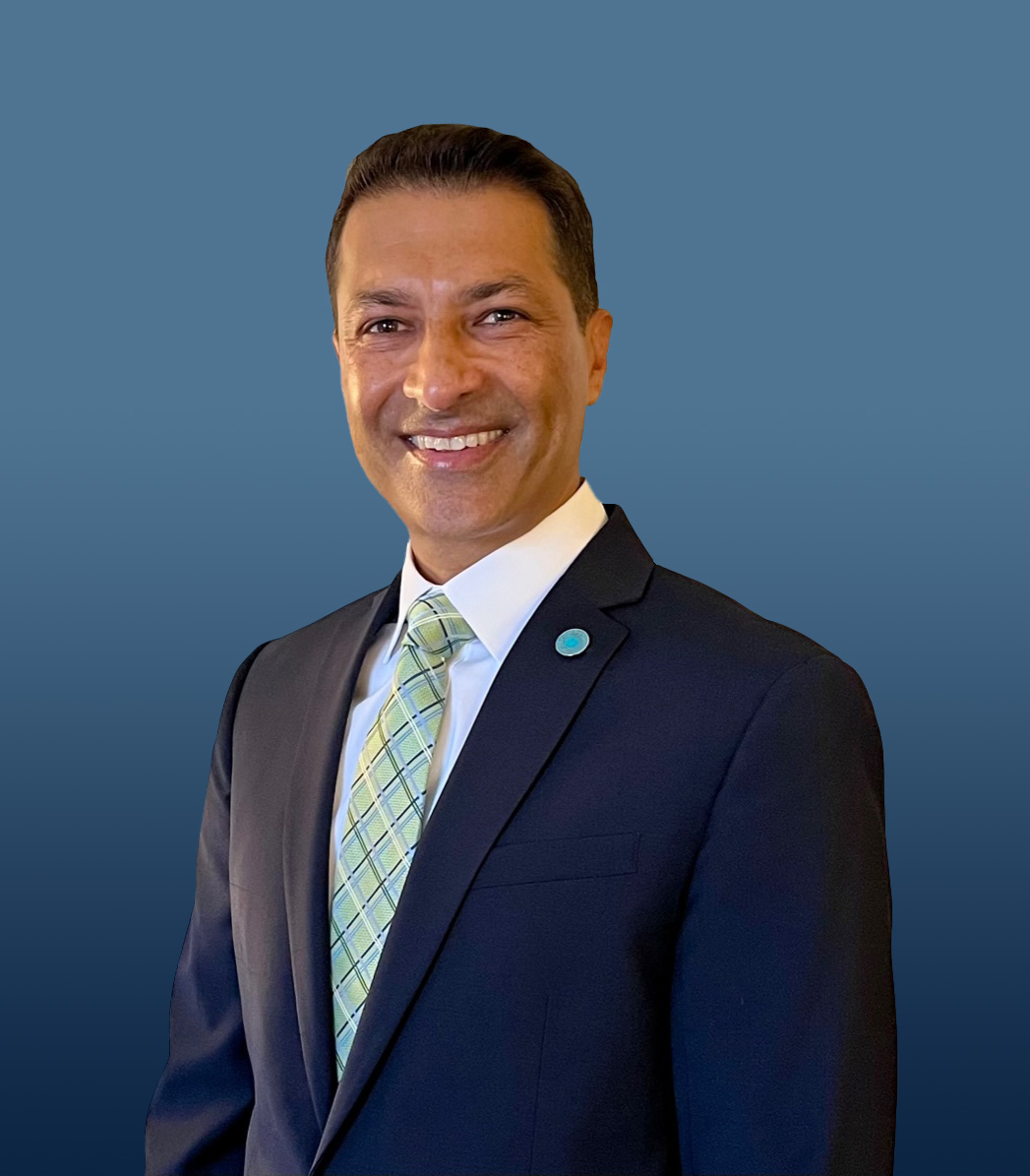 Bridging the know-do gap is one of the myriad factors that promises to shape the future of public health. In this instance, the know-do gap refers to the global health system’s failure to implement the seemingly endless advances in research among different disciplines into policy and practice. Reconciling this scientific dissonance is a passion of Dr. Shafik Dharamsi, dean of The University of North Texas Health Science Center at Fort Worth’s School of Public Health. It was also one of many topics he discussed during his appearance on the Inside HSC podcast.
To celebrate National Public Health Week, Dharamsi appeared on the podcast — hosted by Taylor Rogers and Brandon Sermon, associate director of academic communications, DSAA & DAI. — and spoke about his personal journey to the world of public health and HSC, the future of the School of Public Health, some of the major health challenges facing the world, and more.
“What good is your knowledge if it’s not going to be used to improve the quality and conditions of life in the world?” he said on the podcast. “That’s what I want to amplify within the School of Public Health. We’re developing high-impact educational practice initiatives. And that’s where we prepare our faculty to engage our students in multiple learning initiatives.”
“It’s not just teaching,” he continued. “It’s focusing on learning. It’s not filling an empty vessel but engaging our students in solving real-world problems.”
Dharamsi was born in Tanzania and migrated to Canada at age 11. After being the first in his family to attend college, he began his career as an inner-city schoolteacher. His students, many of whom shared a similar background to his family, struggled with socioeconomic, cultural, language and other barriers. He also noticed how poor health was negatively affecting his student’s ability to learn.
Determined to better understand how one of the wealthiest geographical destinations in the world could suffer such significant health inequities and disparities, Dharamsi decided to go back to school.
“My graduate work was interdisciplinary,” he said. “I focused on the intersection of health, education, ethics and social epidemiology. And that’s the path that has led me here today.”
His work took him to East Africa, British Columbia and eventually to Texas. He was drawn to HSC, he said, because it presented an opportunity to circle back to focus on public health issues. He was inspired by HSC’s mission to create solutions for a healthier community.
Now, as leader of the university’s School of Public Health, Dharamsi’s ambition for the field’s future workforce includes preparing them to grapple with wide-ranging health policy issues such as lack of diversity in public health, mental health, an aging population, fostering a global worldview and more.
“Future generations are depending on us to prepare a public health workforce capable of addressing pressing problems and health inequities here at home and around the world,” he said in an email. “Our School of Public Health is committed to preparing 21st-century graduates to play a critical role in addressing disparities in health outcomes and improving quality and conditions of life in the communities they will go on to serve.”
As of now, he added in the podcast, his SPH students are highly regarded in the field. SPH is one of the few public health schools that requires 600 intern practice hours in the community.
“They realize that we know poverty’s bad for your health,” he said. “We don’t need another research study to tell you that.”
“We need to prepare our students to understand the lived experience of many of these disparities — the experience of vulnerability because you live in a food desert, or you don’t have access to adequate health care, or there isn’t a public health effort in your community. That knowledge can only come when you’re embedded in that community working alongside the community to address those challenges.”




Social media